
Automotive Scanner: Quick Diagnostics
Anúncios
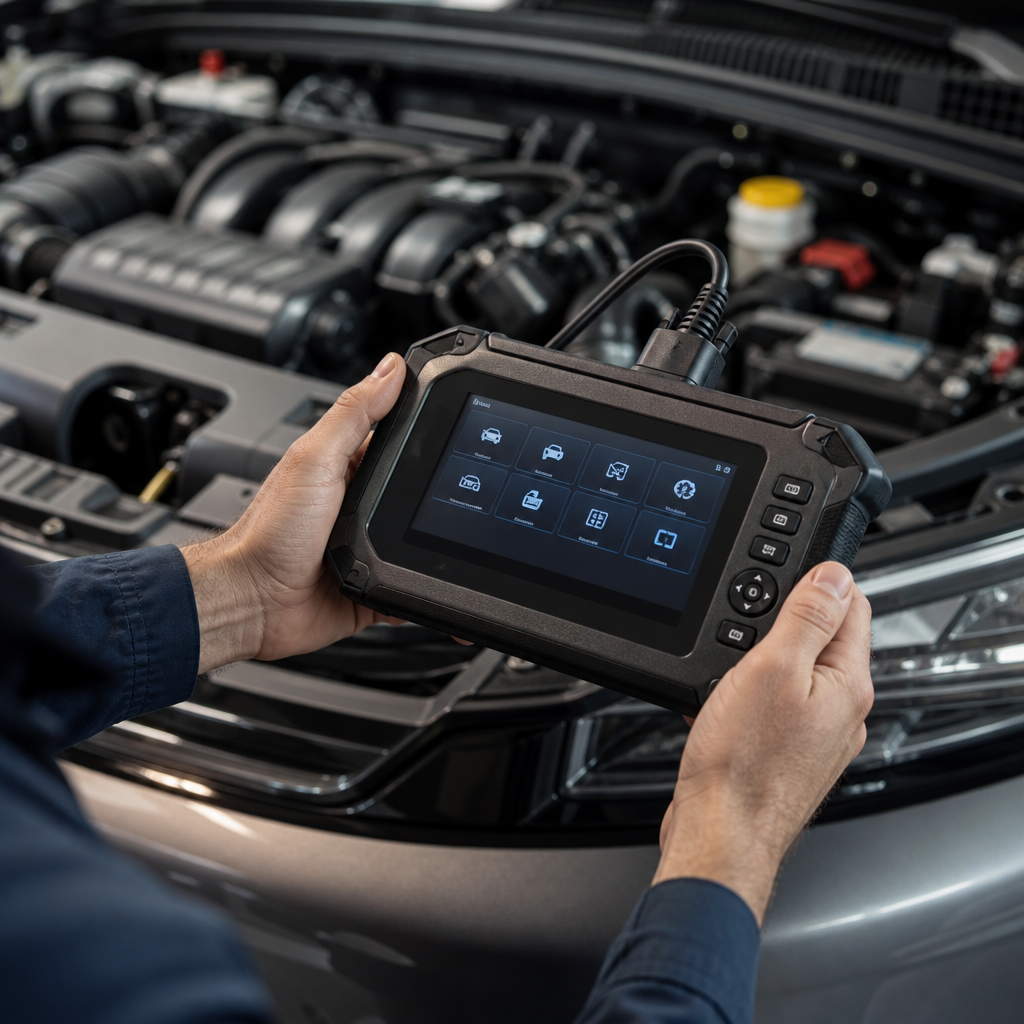
An automotive scanner is an electronic tool that detects system failures of a vehicle by connecting to the on-board computer.
There are several applications and devices on the market that promise to facilitate this diagnosis, but many users face difficulties when using them incorrectly. In this article, you will learn not only how to use an automotive scanner, but also what are the most common mistakes that you should avoid to get accurate and reliable results.
What is an Automotive Scanner and How It Works
An automotive scanner is a device that connects to the diagnostic port of your vehicle, usually located under the control panel.It communicates with the engine control module and other electronic systems to extract information about the operation of the car. When any component fails or has irregularities, the scanner captures this data and displays specific error codes.
The scanners apps work in a similar way, but through Bluetooth adapters that connect to the same diagnostic port. You connect the adapter to your smartphone or tablet and the app displays vehicle information in real time. This method offers portability and facilitates data sharing with specialized mechanics or technicians.
Most modern scanners work with the OBD-II protocol, which is the mandatory diagnostic standard in virtually all vehicles manufactured after 1996.This standardized protocol allows different types of scanners to work on different brands of cars, making the tool versatile and widely compatible.
 ELM OBD2 Car Scanner
Classification:
”’ think it’S.
4.81
Age Classification:
Free Classification
Author:
CAR SCANNER LLC
Platform:
Android
Price:
Free
▶Download on Google Play
Why You Need an Automotive Scanner
When the engine check light comes on your car dashboard, you face uncertainty about the severity of the problem. An automotive scanner removes this uncertainty by providing specific information about what is wrong. You can find out if it is a faulty sensor, a problem in the emission of gases or something more serious before spending money unnecessarily on repairs.
In addition to saving time and money on diagnostics, using an automotive scanner allows you to track the health of your vehicle in a preventive way. You identify incipient problems and solve them before they cause major damage or leave the car inoperable. This is especially important for those who have an older car or with high mileage.
Vehicle owners also report greater autonomy when using scanners as you are not completely dependent on a mechanic to understand what is happening. You can research the error codes found and make more informed decisions about repairs.
Common Error 1: Not Properly Preparing the Vehicle Before Using the Scanner
Many users connect the scanner without carrying out basic preparations, which compromises the quality of the collected data. Before you start using any scanner, you should turn off the engine and wait a few minutes for the vehicle’s electronic system to normalize.This ensures that you capture accurate information and do not confuse temporary problems with real failures.
You should also check that the Bluetooth adapter or physical device is clean and in good condition.Dirty contacts or corrosion on the diagnostic port prevent a proper connection and result in incorrect or incomplete reading of the data. Use a dry, soft cloth to wipe both the adapter and the port before each use.
Another frequent mistake is to connect the scanner with the car on for no reason. Some users think they need to leave the engine running to read the codes, but this is not necessary in most cases. Turning off the engine prevents electrical interference and protects both the scanner and the car systems from possible damage.
Common Error 2: Misinterpreting Error Codes
Automotive scanner error codes follow a specific pattern, starting with a letter followed by numbers (e.g., P0300). You can make the mistake of directly associating a code with a specific problem without considering the context. The same code can have multiple root causes, and the scanner only points to the category of the problem, not the definitive cause.
When you see a code like P0420, which is related to the catalyst, you should not immediately assume that you need to replace the catalyst. This code may be caused by a faulty oxygen sensor, a fuel leak or problems in the distribution current.
Many users make the mistake of using only the error code as a full diagnosis. Modern scanners allow you to view real-time data such as engine temperature, rotational speed and reading of the sensors. You should analyze this complementary data to come to a more accurate conclusion about what is affecting the vehicle.
Common Error 3: Using a Lower Quality or Incompatible Scanner
The automotive scanner market is flooded with devices and applications of dubious quality that promise more than they can deliver. You can waste time and money buying a cheap scanner that offers incomplete or inaccurate readings. Low-quality devices often speak only to specific protocols or only to certain vehicle brands.
Before purchasing a scanner, you should check its compatibility with your specific vehicle. Many apps only work with newer cars that have newer OBD-II systems.If your car is from a previous model to which the scanner is compatible, you will have difficulty getting the full readings of all systems.
Accuracy also varies significantly between different scanners. You can avoid this error by researching real user reviews, checking if the manufacturer offers technical support, and testing the device on a known car before making critical diagnoses. Investing in a recognized quality scanner saves frustration and ensures that you get reliable information about your vehicle.
Common Error 4: Ignore Real-time Failure History and Data
Many scanners store a history of failures that occurred before, different from the active fault codes that exist at the moment. You make a mistake when considering only the active codes and disregard the history. Sometimes a fault appeared once, was corrected by the vehicle itself, but left a record in the system.
Failure history provides valuable context for understanding problem patterns. If you see that a specific sensor has generated error multiple times over the course of the month, this suggests a different pattern than a single, isolated failure.
Also, you should not ignore the real-time data provided by the scanner, such as fuel temperature, intake air pressure, and battery voltage. Comparing these values to manufacturer specifications helps identify if a sensor is providing abnormal readings.
Common Error 5: Not Clearing Error Codes Properly
After identifying and fixing a problem, you may want to clean up the car computer error codes to see if the problem has been solved. Many users make the mistake of cleaning the codes without actually solving the underlying problem. You should always wait for several normal driving cycles after a repair before cleaning the codes, as some problems resolve naturally.
Clearing the codes too early prevents you from checking whether the repair was successful. You should run a few kilometers of normal driving and then read the codes again to confirm that the fault did not return.If the code returns immediately after being cleaned, you know that the problem has not been fully resolved.
Another mistake is to clean up the codes without understanding what data you are losing. When cleaning, you erase the history of failures that may be important for future diagnostics. You must annotate or photograph the important codes and data before cleaning them, keeping a record for future reference and to share with technicians if necessary.
Common Error 6: Relying Too Much on Scanner Without Technical Knowledge
An automotive scanner is a powerful diagnostic tool, but it is not a substitute for real technical knowledge.You make a mistake in assuming that an error code provides a complete and final diagnosis. A scanner identifies symptoms, not necessarily the root cause, and correctly interpreting these symptoms requires understanding of how automotive systems work.
Many users with little experience in mechanics misinterpret the scanner data and make unnecessary or ineffective repairs. You can replace a perfectly functional sensor because you believe it is the cause of the error code, when in fact the problem is elsewhere.
You should use the scanner as an information tool, not as the final word in diagnostics. Combine the scanner data with manual testing, visual inspection and your knowledge of the vehicle behavior.If you lack confidence in its interpretation, always seek guidance from a qualified technician who can analyze the scanner data together with you.
Common Error 7: Not Updating Firmware or Scanner Software
Scanner manufacturers regularly release updates that improve compatibility, add new supported vehicles, and fix bugs. You make a mistake by never checking for updates available for your device or app. Using an outdated scanner means you may have difficulty communicating with newer vehicles or may receive inaccurate readings.
Updates also often include security fixes that protect your data and the electronics in your car. You are vulnerable to technical problems when using an older version. Periodically check the manufacturer’s website or application settings to ensure that you are using the latest version.
Many moderni apps offer automatic updates, but you should confirm that this functionality is enabled. You avoid this error by keeping your devices and apps up to date, which also offers new features and user experience improvements.
Common Mistake 8: Confusing Critical Warnings with Minor Issues
Not every error code that appears on a scanner poses an immediate threat to the safety or functionality of your vehicle. You make an error when treating all codes with the same level of urgency.Some codes indicate minor problems related to gas emission, while others may indicate brake system or transmission failures that require immediate attention.
You should learn to differentiate critical codes from informational codes.A code related to an oxygen sensor may not require immediate repair, while a code indicating problem in the transmission solenoid valve may render the car inoperable.The scanner provides the code, but you need to understand the severity of each situation.
Research each error code you encounter and understand what the real implications are for vehicle operation and safety.You can consult owner manuals, specialized automotive forums, or talk to technicians for context on the urgency of each problem.
Essential Tips for Using an Automotive Scanner Properly
To maximize the benefit of your automotive scanner, you should establish a consistent check routine. Consider reading the codes once a month, even if no warning light is on, to identify incipient problems before they become larger.
You should also learn what the normal readings are for your specific vehicle.Each car has slightly different specifications in terms of operating temperature, fuel pressure, and optimal rotation speed. Understanding these normal values helps you identify when something is really wrong, rather than just dealing with the scanner reading result.
Keep a spreadsheet or digital file with all found codes, dates, mileage, and actions taken. You create a valuable document for future reference and to share with technicians if necessary. This record also helps identify if a problem has been completely resolved or if it only returns intermittently.
How to Choose the Ideal Automotive Scanner for Your Needs
When choosing a scanner, you must first determine whether you need a portable physical device or prefer an application with Bluetooth adapter. Apps are generally more affordable in terms of price and offer a more modern and intuitive interface. You save space by not having to charge a separate device, as it uses only your smartphone or tablet.
Check the specific compatibility with your make and model of vehicle. Some scanners work universally with all OBD-II vehicles, while others offer specific functionality for certain brands. You will get more detailed information using a scanner designed specifically for your car, compared to a universal generic scanner.
Consider the level of detail you need, too. A basic scanner offers only error code reading, while more advanced models allow real-time data visualization, code resetting, and even testing of specific components.You don’t need advanced functionality if you just want to do basic diagnostics, but investing in a more complete option offers flexibility for the future.
Safety and Precautions when Using Automotive Scanners
Before connecting any scanner to your vehicle, you should ensure that the engine is off and the key is off the ignition. Connecting devices while the car is on can cause voltage fluctuations that damage both the scanner and the vehicle’s electronic systems.
You should also check the integrity of the diagnostic port before inserting any adapter or connector. A damaged port may not make proper contact, resulting in inaccurate readings or total communication failure.If you notice that the port appears loose, damaged or corrosive, seek professional assistance before attempting to use a scanner.
When using scanner apps, you should be careful about the security of the collected data. Some apps collect information about your vehicle and location. You should review the privacy policies before installing any app and consider disabling sharing features if you do not trust the developer.
When to Stop Using Scanner and Find a Professional
You should recognize the limitations of your automotive scanner and when it is time to seek professional help.If you find codes related to critical systems such as brakes, airbags or transmission, you should seek a qualified technician instead of trying to diagnose yourself. These systems are too complex for home diagnosis and require specialized equipment.
Also, if you receive the same error codes repeatedly after repairs, this suggests that the problem has not been identified correctly. You should seek a second technical opinion instead of continuing to make repairs based only on scanner readings.
You should also seek professional assistance if the behavior of your vehicle does not match the error code provided by the scanner. Sometimes the scanner provides misleading readings or the problem is more subtle than a single code can express. A professional can combine their experience with the scanner data to arrive at a more accurate diagnosis and perform the correct repair on the first attempt.