Lights on Panel: Diagnose Engine Failures
Anúncios
You are driving and suddenly that yellow or red light comes on the dashboard of your car. The heart goes off, but you are not sure what it means. Because you know that nowdays it is possible to investigate these faults directly by your mobile phone, without having to go immediately to the workshop. This is one of the most practical trends that have been gaining space among modern vehicles.
With the evolution of automotive technology and the emergence of vehicle diagnostic applications, many drivers are able to identify what is happening with the engine before even talking to a mechanism. You can find out if it is something simple or if it really requires a visit to the workshop, saving time and money in this process.
How Panel Lights Work
Your car dashboard lights are an alert system that communicates potential problems in the vehicle. Each color represents a different level of urgency: red indicators critical situations that require immediate stop, yellow suggestions a problem that needs attention soon, and green or blue are just informative. These lights are connected to sensors scanned through the engine and car systems.
When a sensor detects something outside the normal parameters, it sends a message to the electronic central of the vehicle, and this central triggers the corresponding light on the panel. The interest is that information is stored in the car’s computer in the form of fault codes, known as DTC (Diagnostic Trouble Code). These codes are the key to understanding exactly what is happening.
What Does Every Panel Light Mean
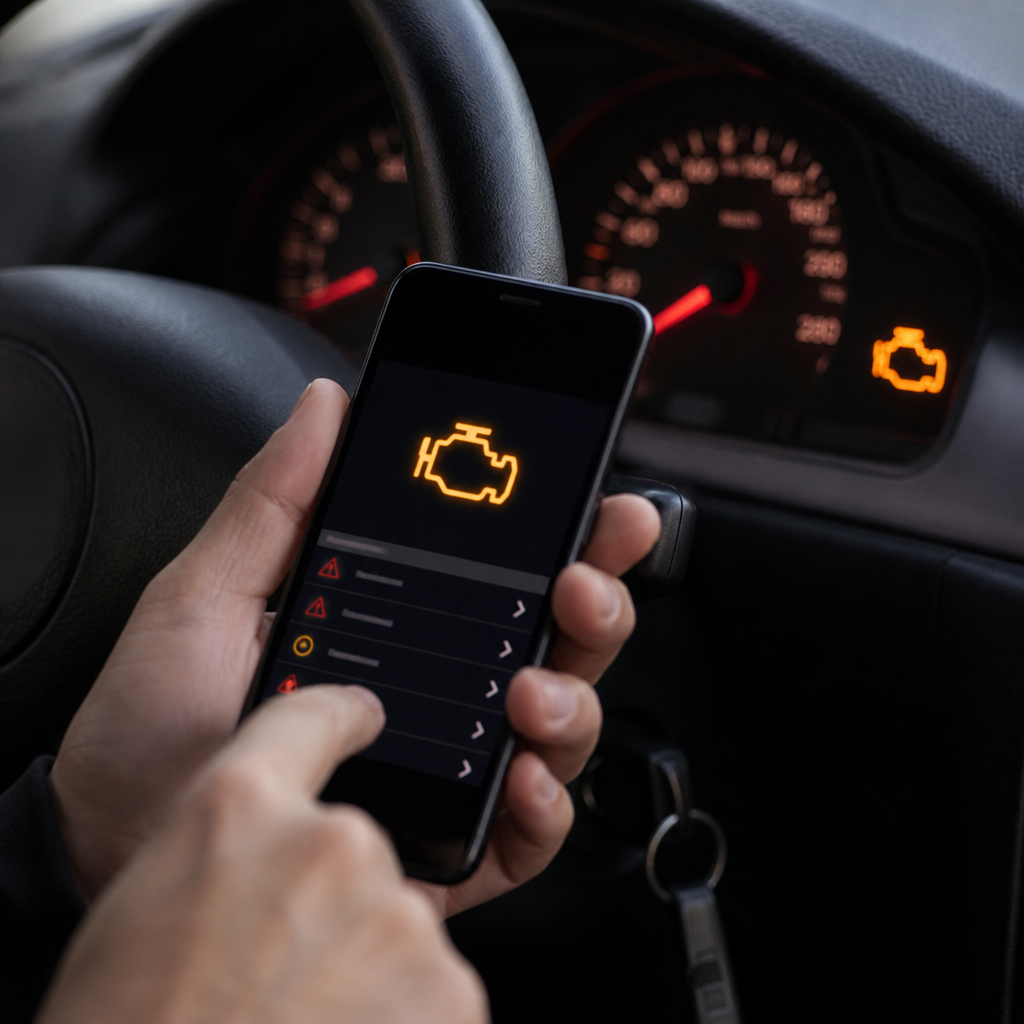
The engine light (check engine), represented by a stylized engine, is one of the most frequent and usually indicates problems in the emission of gases, combustion or related sensors. It can light up by something simple, such as a poorly fitted fuel tank cover, or by more serious problems in the catalyst.The yellow color suggests that you can continue driving, but should check the problem soon.
 ELM OBD2 Car Scanner
Classification:
”’ think it’S.
4.81
Age Classification:
Free Classification
Author:
CAR SCANNER LLC
Platform:
Android
Price:
Free
▶Download on Google Play
ELM OBD2 Car Scanner
Classification:
”’ think it’S.
4.81
Age Classification:
Free Classification
Author:
CAR SCANNER LLC
Platform:
Android
Price:
Free
▶Download on Google Play
The oil light, which looks like a can or drop, warns about the pressure or insufficient level of the oil in the engine.When lit in red, you should stop immediately, as driving without adequate oil quickly damages the engine.The battery light, often in the form of a battery, indicates problems in the charging system or the battery itself, and can leave it on hand if ignored.
The engine temperature light shows that the cooling system is not working properly, which can lead to overheating. The brake light alerts you to problems in the braking system, while it is low fluid level or whole pads. Each of these lights desires appropriate attention, and this is where mobile technology comes in as an ally.
Diagnostic Apps: The Revolution in Your Pocket
Vehicle diagnostic applications have transformed the way owners interact with their cars. These programs work via a small Bluetooth or Wi-Fi adapter that connects to the OBD-II (On-Board Diagnostic) port of your vehicle, usually located under the dashboard, near the steeling wheel. Once connected, the application can access all the data that the cars computer stores, including fault codes.
The current trend is that these apps come with increasingly friendly and explanatory interfaces. Instead of simply showing code like P0300 (random misfire detected), the best apps translate this into plain language, explaining what it means, what the possible causes are, and what the level of urgency is. Some even estimate the repair cost and suggest when it is safe to keep driving.
There are free and paid apps on the market, each with their differentials.The free ones offer basic functionality, while the paid ones usually include fault history, preventive maintenance alerts and more detailed analysis.The good news is that you do not have to spend much to start investigating your vehicle problems independently.
Step by Step: How to Use Your Phone to Diagnose Failures
The first step is to purchase an OBD-II adapter compatible with your mobile phone. There are models that connect via Bluetooth, Wi-Fi or USB-C depending on your device. Download a reliable diagnostic application in your app store (Google Play or App Store), making sure to read the reviews and check if it is compatible with the year and model of your car.
With the adapter in hand, park the car in a safe place and locate the OBD-II port, which is usually under the dashboard, to the left of the steering wheel, or sometimes under the passenger side panel.Connect the adapter firmly to the door until you hear a click. Most adapters have a small LED that flashes when turned on, indicating that it is working properly.
Now open the app on your phone and look for a button like “Connect” or “Start Diagnosis”. The app will search for nearby Bluetooth or Wi-Fi devices and should find your adapter. Once connected, the app will start scanning the car computer for stored faults. This may take a few minutes, so be patient.
When the scan is over, you will see a list of fault codes found, each with a description and severity assessment. Some apps allow you to see a history of these failures, showing when they occurred and how often. Use this information to decide whether it is safe to continue driving or whether to seek a workshop immediately.
Interpreting Codes and Deciding the Next Step
Fault codes follow an international standard and start with a letter followed by four numbers. The letter indicates the category (P for powertrain, B for body, C for chassis, U for network), and the numbers specify the exact fault. For example, P0101 indicates a problem in the air mass flow sensor. Knowing these codes helps you to talk more properly with a mechanic.
Not every failure is critical or requires immediate stop. An oxygen sensor failure can make the car consume more fuel, but you can drive normally. On the other hand, a brake system failure requires urgent action. Good apps sort faults by color: green means informative, yellow means moderate attention, and red means immediate stop.
Before you rush out to the workshop, research a little about the specific code that appeared. Often, failures are caused by simple situations such as a loose fuel cap, low battery or dirty sensor. You can even solve some problems quickly at home, saving an expensive visit to the workshop. But if the failure is related to critical systems such as brakes or steering, seek a professional immediately.
Current Trends in Mobile Vehicle Diagnostics
Artificial intelligence is coming to the automotive diagnostic applications. Some more advanced apps learn over time the operating patterns of your car and can predict future failures based on history. This allows for real preventive maintenance, where you replace parts before they fail completely, avoiding problems on the road.
Another important trend is integration with workshop location platforms.Some apps show reliable mechanics near you and even share the diagnosis made directly with them, making it easier to budget and schedule.This connection between digital diagnostics and face-to-face service is revolutionizing the car owner experience.
IoT (Internet of Things) connectivity is also advancing in automotive applications.Newer cars can send diagnostic data directly to the cloud, allowing you to access information about your vehicle from anywhere.Some manufacturers are developing their own solutions that synchronize with mobile applications, offering a complete view of the health of the car in real time.
Good Practices when Using Mobile Diagnostics
The first good practice is not to blindly trust a single app or diagnosis. If a failure seems severe or costly, seek a second opinion using another app or visiting a trusted mechanic.Adapters can have quality variations, and sometimes a fault code may not reflect the real problem.
Keep a personal record of the faults that appear over time. Write down the dates, codes and whether you solved the problem or not. This history is extremely valuable for identifying patterns and for sharing with a mechanic, helping you make a more accurate diagnosis. Many problems are intermittent and only appear in certain conditions, so documenting is essential.
Do not ignore faults just because the car keeps running normally. A failure in the catalyst or oxygen sensor may not affect immediate performance, but it impairs pollutant emission and increases fuel consumption significantly.Solving these problems early saves you money in the long run and keeps your car in better condition.
Use mobile diagnostics for preventive maintenance as well. In addition to checking for faults, many apps allow you to monitor the overall health of the car, such as engine temperature, tire pressure via sensors and fuel consumption.This information helps you make better decisions about when to perform maintenance, extending the life of the vehicle.
Finally, choose adapters and applications from well-recognized and well-rated brands.There are low-quality products that can provide inaccurate diagnostics or even damage the car system. Invest a little more in reliable equipment and well-developed applications, as this ensures safety and accuracy in readings.