80 Years: Fashion, Music and Culture of the Decade
Anúncios
The 80s marked a radical transformation in pop culture history, creating trends that echo to this day. This decade revolutionized the way people expressed themselves through fashion, music and the arts, establishing visual and sound patterns that defined an entire generation.
The 1980s was the stage for visual experimentation never seen before, combining vibrant colors, exaggerated silhouettes and an attitude of transgression that impacted generations.The 80s brought with it a mixture of economic optimism in some regions, rising technology and a cultural rebellion that challenged the conventions of the previous era.Understanding this was fundamental for those who wanted to master historical references of fashion and contemporary culture.
The Fashion Revolution of the 80s
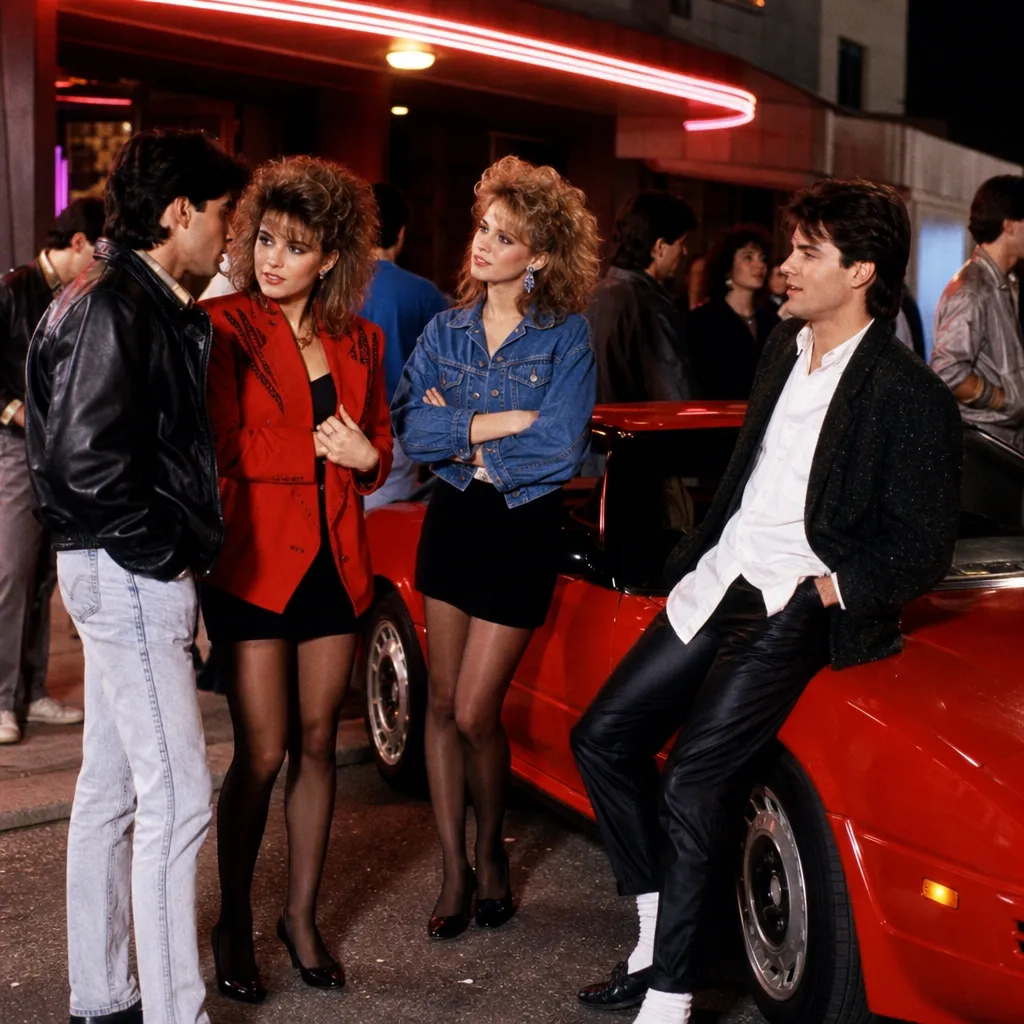
The fashion of the 80s broke all the rules that existed until then, emphasizing excess, boldness and personal expression above all. You could use colors that did not match according to traditional standards, such as shock pink with electric purple or lemon yellow with fluorescent green, and this was considered fashion. The standardization disappeared, giving way to an “all goes” that allowed each individual to create their own unique style without fear of harsh judgments.
The silhouettes of the clothes also underwent drastic transformations during this period, with extremely wide shoulders becoming the norm in the collections. Structured blazers, often with accentuated shoulder pads, dominated both the female and the male wardrobe, creating a square silhouette that represented power and confidence. At the same time, the pants became a fighter on the legs, contrasting with the threshold of the children, and the complexity of the children, represented power and confidence. At the same time, the pants became a threat on the legs, contrasting with the children's children, and the threshold of the children.
Accessories played an absolutely central role in the construction of the 80s look, with you using multiple bracelets, bulky necklaces and large earrings simultaneously. Bright and reflective materials such as chrome plastic, vinyl and fake stones abounded in clothes and accessories, creating a stunning and futuristic visual effect.Color stockings, often in metallic or neon tones, were purposely worn with sandals or sneakers, and leggins became a basic piece that could be combined with just about anything in your wardrobe.
 Vintage photo maker
Classification:
^^^^^^^^^^^^^^^^^^^^^^^”’
4.42
Age Classification:
Classification 12 years
Author:
CRE APP.COM
Platform:
Android
Price:
Free
▶Download on Google Play
Vintage photo maker
Classification:
^^^^^^^^^^^^^^^^^^^^^^^”’
4.42
Age Classification:
Classification 12 years
Author:
CRE APP.COM
Platform:
Android
Price:
Free
▶Download on Google Play
The influence of subcultures such as punk, new wave and hip-hop created several fashion “subscenarios” within the 80s, each with its distinctive features.Punk maintained its rebellious side with black leather jackets, chains and safety pins decorating the clothes, while new wave adopted a more futuristic aesthetic with geometric clothes and aggressive colors.Hip-hop, emerging from the streets of New York, brought baggy pants, oversized branded sweaters and sports caps, deeply influencing the urban fashion you see today.
Hair in the 80s required as much time and dedication as the clothes you chose to wear, with the wavy permanent or the voluminous curls being practically mandatory. Women used powerful hair dryers, wooden combs and generous amounts of gel or mousse to achieve that explosive volume that was a trademark of the time. Men, in turn, adopted cuts such as mullet and voluminous afro, often dyeing their hair in vibrant colors or leaving them white with a totally artistic goal.
Makeup in the 80s was as dramatic as the rest of the visual aesthetic, with intense eye shadow colors in blue, pink and purple applied generously across the mobile eyelid. You found in any fashion magazine references to bases much lighter than the natural skin tone, extremely colorful blush on the cheekbones and lips in burnt red or shock pink. The black eyeliner was applied in abundant quantity and often extended beyond the outer corner of the eye, creating a very pronounced cat effect.
The Music That Defined a Generation
The 80s completely revolutionized the music industry, introducing synthesizers and electronic programming that transformed the way music was created and consumed. You could hear everything from pure synthpop electronics to extremely amplified hard rock, to commercial pop that dominated radio. Musical diversity had never been more accessible to the general public, with music videos on MTV helping to promote artists in a way never seen before.
The synthpop, represented by bands such as Depeche Mode, Duran Duran and New Order, brought a futuristic and danceable sound that became synonymous with the decade. These artists extensively used synthesizers and electronic programming to create soundscapes that seemed to come from the future, influencing generations of electronic music producers.The visual aesthetics of these bands perfectly matched the fashion of the time, with futuristic costumes and dramatic makeup that complemented a completely innovative musical proposal.
Rock during the 80s was divided into several strands, from the melodic and accessible rock of U2 and The Police to the extreme metal of Metallica and Slayer that you discovered in cassette tapes shared between friends. Hair metal, with bands like Motley Crue, Guns N’ Roses and Poison, combined heavy guitars with extravagant looks and emotional vocals that won millions of fans around the world. These musicians took the large of their own guitars with extravagant looks and emotional voices, thus becoming more than 8.
Commercial pop dominated the charts with artists like Michael Jackson, Prince, Madonna and Whitney Houston creating hits that became immediate classics of world music.Michael Jackson, in particular, elevated the music video to a completely new artistic level, transforming “Thriller” into a cultural phenomenon that transcended the simple category of music video.
Funk and disco did not completely disappear from the music scene in the 80s, evolving into new forms and deeply influencing the emerging hip-hop that you can trace back to its origins. Artists like Grandmaster Flash, Afrika Bambaataa and Run-D.M.C. created an urban musical revolution that began to conquer the mainstream, bringing a more direct social message and an attitude that contrasted with the traditional pop industry.Hip-hop of the 80s laid the foundations for one of the greatest musical revolutions of the XX century.
Reggae and ska also found a place in 80s musical culture, with artists like Bob Marley (even though he died in 1981) still influencing generations and Peter Tosh continuing his work.British ska bands like The Specials created a sound that combined Jamaican rhythms with a punk-rock approach, creating a musical option that you could explore outside the most obvious commercial circuits.
Technology and Cultural Innovation
Technology during the 80s radically transformed the way you consumed media and culture, with cable television allowing access to multiple channels specializing in different genres and styles. MTV, launched in 1981, completely revolutionized the way music was promoted and consumed, making the music video a central element of the musical experience and not just a promotional accessory.
The video game developed enormously during that decade, with consoles like the Atari 2600 and later the Nintendo Entertainment System transforming home entertainment.You could play at home instead of just in arcades, bringing a shared gaming experience to family and friends who frequent your place of residence.Pixel graphics and electronic sounds from video games become part of the visual and sound identity of the 80s, influencing artists and content creators.
Portable walkmen and discmans allowed you to take your favorite music anywhere, creating a revolution in the way audio was consumed and democratizing access to the music experience. K7 cassette tapes became the standard way to store and share music among friends, creating an alternative media economy that did not fully pass the control of record labels.The possibility of recording your own custom mixtapes meant that you could create soundtracks for your lives in an impossible way in the previous era.
Personal computers were becoming popular during the 80s, with machines like the Commodore 64 and the Atari ST creating a once-impossible home computing scene.You could use computers not only for work, but also for art creation, music and programming, democratizing tools that were previously restricted to professionals.The European demoscene created impressive computer visualizations that pushed the boundaries of what was technically possible with limited hardware.
Photography also underwent important transformations during the 80s, with more accessible cameras allowing more people to have access to visual creation tools. Photographs of the time reflect the extreme aesthetics of fashion, music and visual culture, creating a visual archive that you can explore today to fully understand the era. Some photographers became artists recognized precisely for their ability to capture the visual essence of the 80s.
Cinema and Visual Arts of the Decade
The 80s cinema produced blockbusters that still redefine the genre to this day, with films like “E.T.”, “Jaws”, “Terminator” and “Back to the Future” becoming immediate cultural phenomena. You had access to increasingly sophisticated cinematic experiences in terms of special effects and cinematography, with directors like Steven Spielberg and James Cameron pushing the limits of available technology. Action films with charismatic characters like Arnold Schwarzenegger and Sylvester Stallone established archetypes that still define the genre today.
The cinema of the 80s also introduced the cinematic music video, where visual storytelling became as important as music, with Michael Jackson’s “Thriller” functioning as a prototype of high-budget musical short film.You could experience a complete fusion between cinema and music in formats that did not exist before, creating a new artistic medium that combined the best features of both. Renowned filmmakers like Martin Scorsese began working with musicians to create completely new audiovisual experiences.
Television produced series that became cultural phenomena, from “Dallas” and “Falcon Crest” with their corporate drama plots to “Miami Vice” that captured the neon aesthetics of the 80s in each frame. You adjusted your weekly schedule around the most popular series, creating communities of fans who discussed the episodes and speculated about future developments.Science fiction series like “Blade Runner” profoundly influenced the way the visual culture of the 80s was presented and consumed.
The fine arts in the 80s experienced postmodernism, with artists such as Jean-Michel Basquiat and Keith Haring creating works that combined references from high culture and street culture.You found art in prestigious galleries, but also on city walls through graffiti and street art that began to gain recognition as a valid artistic form.The German neo-expressionist movement with artists such as Anselm Kiefer created dense and textured works that reflected the complexities of the postwar period.
Artistic photography took advantage of the technology available to create increasingly sophisticated images, with fashion photographers like Annie Leibovitz creating iconic portraits that you still see being reproduced in contemporary contexts.Polaroid became a legitimate artistic instrument, with photographers exploring its unique features and vibrant colors.The combination of professional technique and amateur experimentation created a rich visual ecosystem that you can study today to fully understand how the image was used at that time.
Dance, Social Movements and Counterculture
Breakdancing emerged from the streets of New York in the 80s, completely revolutionizing the way you understood urban dance and creating a form of expression that combined athleticism, creativity and competition. You could see dancers performing complex acrobatic movements with hip-hop tracks in the background, creating performances that were simultaneously artistic and technically challenging. Breakdancing became a cultural phenomenon that crossed racial and social barriers, creating communities where creativity was valued above anything else.
Voguing, originating from the LGBTQ+ communities of New York, developed during the 80s as a form of dance and identity expression that defied heteronormative norms.You would find dancers who combined influences from ballet, modern dance and fashion photography to create a unique and completely recognizable style. Voguing would eventually gain mainstream recognition, especially after Madonna’s success in incorporating elements of the style into her music videos and performances.
Raves began to emerge in European cities during the late 80s, creating clandestine parties where you danced all night to the sound of electronic music produced live by DJs. These parties often took place in abandoned places or in unconventional environments, creating temporary communities that prioritized music, dance and a sense of total liberation. The aesthetics of raves, with their fluorescent clothes, loose bracelets and bright accessories, would become completely synonymous with electronic music and dance culture of the 80s and 90s.
The punk movement continued to evolve during the 80s, with bands like The Sex Pistols leaving legacy and new generations of punk musicians creating subgenres like post-punk and hardcore punk. You found punk communities that maintained the attitude of rebellion and DIY of the previous decade, but with aesthetic and musical evolution that reflected the context of the 80s. Hardcore punk, especially in cities like Washington DC and Los Angeles, created a vibrant scene that you could explore by attending small concert halls and imported records in specialized stores.
The hip-hop movement transcended music during the 80s, creating a complete culture that included elements such as breakdancing, graffiti, fashion and an attitude of resistance against marginalization.You had access to a form of expression that originated in afro-descendant and latin urban communities, bringing direct social messages and a creativity that defied established standards.Hip-hop of the 80s laid the foundation for revolutionizing the global culture of the following decades.
Checklist: Essential Elements of 80s Culture You Should Know
If you want to fully master the knowledge about the culture of the 80s, you can use the following checklist to ensure that you are covering all the important aspects of this transformative decade.This checklist acts as a practical guide that helps you identify gaps in your knowledge and explore areas you may have previously ignored. Use this tool to assess your understanding and to organize your exploration of the era in a systematic and thorough way.
Fashion elements you should know: exaggerated shoulders and shoulder pads in blazers, neon and fluorescent colors boldly combined, colorful socks with holes of purpose, leggings as a basic piece of the wardrobe, leather and denim jackets with pins and chains, voluminous and wavy permanent hair, dramatic makeup with colored shadows, multiple and bright accessories simultaneously, tight silhouettes on the legs, and videos of the body, above them, above them
Music artists you should study: Michael Jackson and his visual revolution, Madonna and her ability to constantly reinvent herself, Prince and his provocative androgyny, Whitney Houston and her vocal excellence, Duran Duran representing synthpop, Metallica in extreme metal, The Police in progressive rock, U2 in alternative rock, Run-D.M.C. establishing hip-hop, Grandmaster Flash in the origins of hip-hop.
Cultural Movements you should explore: punk and post-punk as evolution of rebellion, new wave as futuristic visual and sonic aesthetics, hip-hop as urban cultural revolution, breakdancing as competitive dance form, graffiti as legitimate urban art, synthpop as electronic revolution, hair metal as visual and musical extremism, new romanticism as artistic androgyny, goth as aesthetic darkness. Each movement had unique characteristics that you can study in depth to understand the nuances of the time.
Technologies you should know functionally: Walkmen and music portability, K7 cassette tapes as mainstream media, MTV as television revolution, Atari 2600 and Nintendo Entertainment System as revolutionary consoles, emerging personal computers, more accessible cameras, music videos as artistic form, synthesizers as revolutionary musical instruments.
Brand Films and Series you should watch: E.T., Jaws, Terminator, Back to the Future, Miami Vice, Blade Runner, Tootsie, Gremlins, The Breakfast Club, Fast Times at Ridgemont High. These cinematic and television works capture the aesthetics, values and concerns of the time in a complete way, allowing you to experience the culture of the 80s through immersive visual narratives.
Visual references that you must compile: fashion photographs of the magazines of the time, album covers that reflect the visual aesthetics, photographs of concerts and live shows, images of street art and graffiti, frames of iconic video clips, scenes from films and series, photographs of streets and urban environments of the 80s. You must compile a personal visual file that works as a constant reference when you want to understand or create something inspired by the 80s.
Designers and Visual Artists you should research: Jean-Michel Basquiat, Keith Haring, Andy Warhol continuing his work, Vivienne Westwood in punk fashion, Giorgio Armani establishing the powerful silhouette, Karl Lagerfeld resurrecting Chanel, Issey Miyake exploring new materials, Annie Leibovitz creating iconic portraits, Helmut Newton and her provocative photography. You must study the complete work of these creators to understand the different visual languages that coexisted simultaneously in the 80s.
Secondary Musical Genres you should explore: electronic synthesizer, reggae and ska, funk and disco in transformation, new wave as stylistic fusion, post-punk as a reaction to punk, synth-rock as fusion of electronic and rock, emerging and consolidating hip-hop, goth rock as denial of optimism, nascent electronic industrial, commercial pop on the rise globally. You should listen to examples of each subgenre to understand the musical richness of the period without reducing everything to the most popular artists.
Cultural Attitudes and Values that defined the 80s: economic optimism in advanced capitalist contexts, rebellion against previous generations, experimentation without fear of consequences, search for radical individual expression, fusion between high culture and street culture, technology as a tool of creation and expression, community as an important value despite individualism, irreverence towards the rules and norms established.You must understand that the 80s valued authenticity in a unique, even if contradictory way in its multiple simultaneous movements.
Historical and Political Contexts you should consider: end of the Cold War with Gorbachev, rise of conservatism with Reagan and Thatcher, economic crises in some contexts, technology as a symbol of progress, polarization between wealth and growing poverty, LGBTQ+ movements gaining visibility, racial and social issues in prominence, youth as a market segment focus. You should understand that the culture of the 80s was not an isolated phenomenon, but rather a creative response to the specific historical and social contexts of that period.
Culturally Important Places you should know: New York as the epicenter of hip-hop and urban culture, London as the center of fashion and new wave, Los Angeles as the capital of entertainment, Berlin as a symbol of historical transition, Tokyo as an emerging technological center, Miami as the stage of drug trafficking and neon aesthetics, Detroit as the origin of techno, Sao Paulo as a culturally vibrant center.You must understand that the 80s were not a uniform global phenomenon, but rather a series of local movements that eventually connected globally through technology and media.
Contemporary legacy that you must recognize: retro fashion of the 80s that returns cyclically, neon aesthetics in contemporary design, hip-hop as the dominant musical genre originating from the 80s, influence of music videos on current digital content, nostalgic references in pop culture, mobile technology as a direct evolution of the walkman, internet as evolution of the exchange of cassettes, DIY attitude in contemporary creation. You must be able to recognize elements of the 80s in contemporary artistic practices and creations, demonstrating understanding of historical continuity.