Photos Style 80s: Retro App Free
Anúncios
The 80s are back in fashion and retro nostalgia dominates social networks. If you want to turn your photos into images with the iconic style of this decade, there are several options of applications that recreate the visual effects typical of that golden age.
 Vintage photo maker
Classification:
^^^^^^^^^^^^^^^^^^^^^^^”’
4.42
Age Classification:
Classification 12 years
Author:
CRE APP.COM
Platform:
Android
Price:
Free
▶Download on Google Play
Vintage photo maker
Classification:
^^^^^^^^^^^^^^^^^^^^^^^”’
4.42
Age Classification:
Classification 12 years
Author:
CRE APP.COM
Platform:
Android
Price:
Free
▶Download on Google Play
Photo editing technology has advanced a lot, allowing applications to create filters and effects that perfectly simulate the visual characteristics of the 80s.Saturated colors, film grains, soft blur, warm color palettes and even retro graphics have become accessible to anyone with a smartphone. You no longer need to have advanced technical knowledge in Photoshop to achieve this desired look.
Why 80s Aesthetics Remains Relevant
The 80s left an immeasurable visual legacy that transcends generations. Films, series, music and fashion from that period created a unique aesthetic identity that still fascinates people today.
The appeal of retro aesthetics is linked to the visual simplicity and authenticity that it conveys. While modern filters seek to make photos cleaner and artificial, the style of the 80s celebrates imperfections and texture. This contrast has made many people seek just the opposite of current digital perfection, looking for a touch of nostalgia in their images.
Main Visual Characteristics of the 80s
Before choosing an application, it is important to understand what are the characteristics that define the look of the 80s. Color saturation is one of the most striking, with vibrant and warm tones dominating the photographic compositions of that time. You will find warm yellows, magenta roses, turquoise blues and intense reds as the main palette.
The grain of the film is another trademark of the period, creating a visible texture in the photograph that refers to the analog films used in the decade. In addition, vinheting (that darkening effect on the edges) was extremely common in photos of the 80s. Soft lights, slightly blurred focus and reduced contrasts also helped create that dreamy feeling that characterized many images of that time.
Light and reflection effects were also popular, especially flare (those rays of light that appear when the camera points to light sources). You will see many photos from this era with colored edges, double exposure effects and even small technical flaws that today we consider intentional aesthetics.These elements together createFrom here on, you will have practical examples to recreate this look in your applications.
Popular Apps for Creating 80s Style Photos
There are several apps on the market that allow you to recreate the look of the 80s in your photos. Each of them has unique features and different approaches to achieve this much desired retro effect. Some are completely free, while others offer premium versions with more features.
Huji Cam is an application that simulates a disposable camera from the 90s, offering a very close look to the 80s with its film effects and natural blur. You can capture photos directly with the app or edit existing images with the available retro filters. The interface is simple and intuitive, perfect for those who want fast results without complications.
Unfold is another app that offers 80s style templates to create stories and edit photos with this retro look. You will have access to fonts, transition effects and overlays that reinforce the aesthetics of that decade. The quality of the results is professional, and the app works great for both individual photos and to create more complex compositions.
Dazz offers an experience focused on analog film, allowing you to choose between different types of film and retro cameras to simulate. The filters are based on real films from the 70s and 80s, bringing authenticity to the results. You can manually adjust the color and contrast parameters to get exactly the look you want.
Vintique specializes in retro and vintage effects, with filters covering different decades including strongly the 80s. You can apply effects of aged film, grain, blur and other elements that characterize the aesthetics of that era. The app is light and works well even on older smartphones.
Comparison: Which App to Choose
Choosing the best app depends a lot on what you hope to achieve with its retro effects. If you want something fast and with immediate results, Huji Cam is excellent because it offers pre-presets that recreate the look of the 80s almost instantly. You do not need to make any manual adjustments and can start using the app in seconds after downloading.
For those who want more control over each aspect of editing, Dazz is more appropriate because it allows you to adjust color, saturation, contrast and texture individually. You can accurately recreate any specific effect you have in mind, without being limited to the presets offered. This makes it ideal for those who have more experience with photo editing or want well-customized results.
If you work with content creation for social networks and need more than just filters, Unfold is the most complete choice. You will have access to templates ready for stories, posts and reels with aesthetics 80 years already integrated. The versatility of the app makes it perfect for content creators who want to integrate retro effects into their visual strategies.
Vintique is best for those who want simplicity with quality, offering a balanced point between ease of use and editing power. You won’t have as many options as Dazz, but you’ll have more flexibility than Huji Cam. It’s a solid choice if you want something reliable that works well on different devices.
How to Achieve the Best Results with 80s Effects
After choosing your app, some principles will help you get better results with the 80s style.First, start with a well-lit photo and with good quality, as the effects work best when starting from a solid base.The app will add grain and texture, but a sharp image ensures that the important details remain visible after applying the filters.
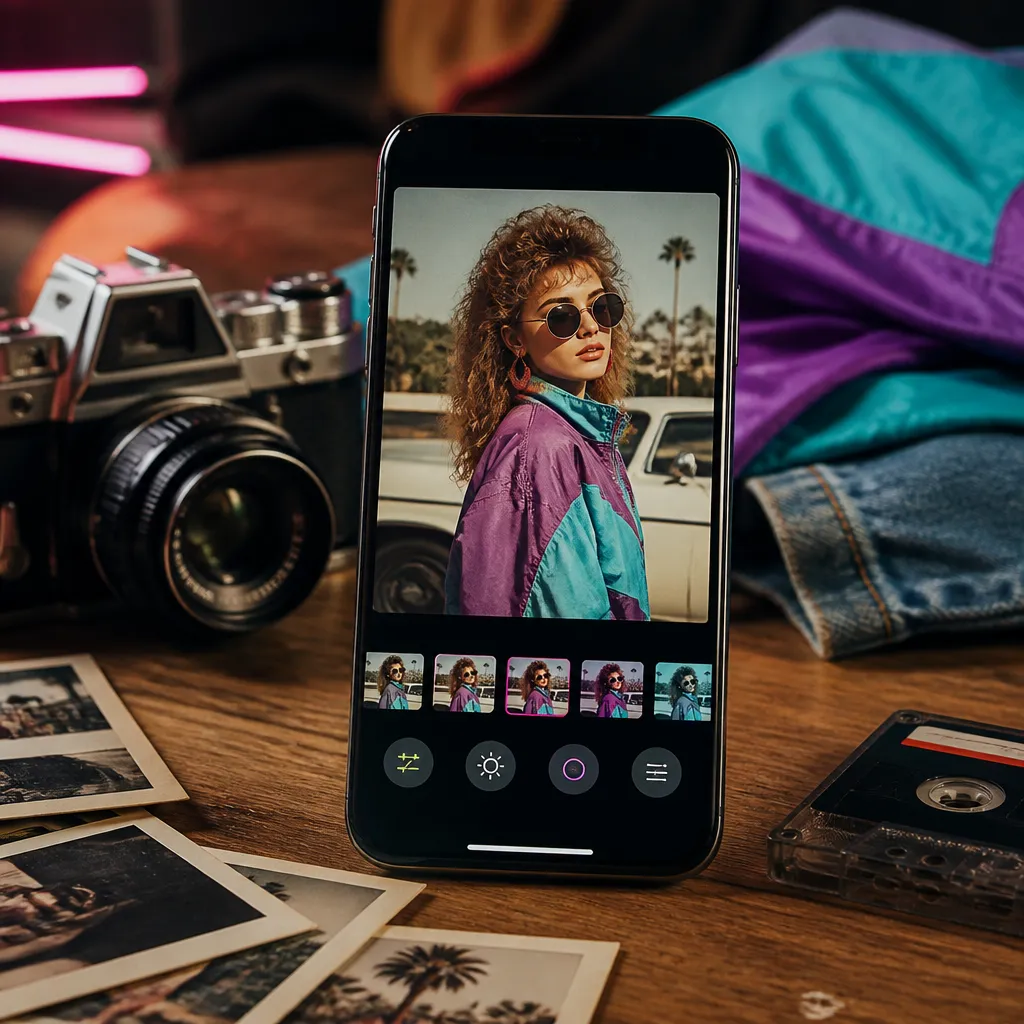
When editing, try to increase color saturation moderately to recreate that vibrant tone of the 80s without making the image exaggerated or artificial. You should seek a balance where the colors are intense but still natural enough to look authentic. Test different levels of saturation to find the sweet spot for your specific image.
The grain of the film is essential for the retro effect, but you should not overdo it. A moderate grain creates the nostalgic texture without impairing the clarity of the image or making it look too grainy.
Consider adding light vinheting at the edges to intensify the retro effect and direct attention to the center of the image. You will find this option in virtually all the applications mentioned and it works great for photos of specific people or objects. The darkening at the edges creates depth and reinforces the look of an old camera.
Do not forget to experiment with different types of filters offered by the application you have chosen. You may find that a filter called “Polaroid” works best for your photos, while another called “Kodak” is best for different types of composition. Constant practice will help you understand which filter produces the best results for different scenarios.
Practical Tips for Perfect Retro Style Photos
You can enhance the effects of the 80s considering not only editing, but also how to capture your photos originally. Look for natural and soft lighting, preferring the times of day where the sun is not as intense, such as sunrise or sunset. This type of lighting already works very well with the style of the 80s because it naturally reinforces the warm tones that characterize the era.
Choose color palettes in clothes, scenery or objects that match the aesthetics of the 80s. You can use warm pink, yellow, turquoise blue or even that shade of orange that was so popular at that time. These visual elements already existing in the setting help the filters work better and create a more coherent and authentic result.
Enjoy retro elements in your surroundings to increase the desired visual effect. You can look for vintage furniture, antique signs, retro cars or any object that has the aesthetics of the 80s to appear in your photos. These details work in synergy with the filters of the application, creating a composition fully immersed in the look of that decade.
Try different angles and compositions because some work better with retro effects than others. You may notice that close-ups work differently than photos with more environmental context, and that slightly inclined angles reinforce the retro feeling of carelessness that characterized 80s photography. Test hard before defining which composition works best for your style.
Consider the final color palette you want to achieve because some apps allow you to adjust the overall tone of the image to warmer or cooler. You may prefer that warmer, yellowish tone typical of old aged photos, or a more saturated and vibrant tone that refers to the pop art of the 80s. The choice depends on the visual message you want to convey.
Limitations and Considerations when Using These Apps
While these apps are great, you should be aware of some limitations they present.Not all filters work equally well on all types of photos, and you may find that an app that promised incredible results does not work as well with your specific images.
Many of the apps offered for free have premium versions with more features and no ads. You can start using the free version to familiarize yourself with the app, but eventually you may want to upgrade to remove limitations and access unique filters.
The quality of editing also depends a lot on the quality of the original photo. You will not be able to turn a very dark or blurry photo into a perfect image only with filters from 80 years. The applications work best when you start with a solid base, with good lighting and proper focus on the original camera of your smartphone.
Another important point is that some apps may not be available in certain countries or there may be usage restrictions. You should check that the app you have chosen is available in your region and is synced to your local terms of service. Some apps may also collect user data, so please read the privacy policies before installing.
Performance also varies depending on your device. You may notice that on older smartphones some apps work slower or may not offer all the features available in newer versions. Consider the specifications of your device when choosing which app to download to ensure a smooth experience.
You should keep in mind that no application will be able to perfectly recreate the look of real cameras and movies of the 80s, as each had unique and variable characteristics. The filters are approximations of the style of that era, not exact reproductions.The best you can do is choose the application that most closely matches the aesthetics you want to achieve.
Finally, don’t put all your hopes in one app because personal creativity and experimentation are key. You can use different apps for different types of photos, or combine effects from multiple apps to achieve even more personalized results.