
Test Hair Cuts Online Now
Anúncios
Have you ever wanted you could see how a new haircut would look on you before you go to the salon?Hair simulation technology is revolutionizing the way people decides on changes in appearance.This practical solution allows you to test different styles without compromising your current image.
The truth is that many people still confuse haircut simulators with apps that actually cut hair or that have surgical accuracy in the prediction.In this article, we will explore what is real and what is myth when it comes to testing haircuts online, and how you can use these tools in the best possible way.
What Haircut Simulators Really Are
Online haircut simulators are digital tools that use facial recognition technology and artificial intelligence to overlay different hair styles on your photo.You take a selfie or upload an image of yourself, and the application uses algorithms to adapt various cuts to the shape of your face, length and hair type.This technology is not new, but has evolved significantly in recent years.
The basic operation is simple: you allow access to the camera of your device, the system identifies your facial features and the structure of your current hair, and then virtually approximates different cutting models. Most of these simulators offer a library with dozens or even hundreds of options, from short, shredded cuts to long, heavy styles.You can view each one in real time, adjust angles and appear different variations side by side.
Myth: Simulators Deliver 100% Realistic Accuracy
One of the biggest myths is that you will see exactly how the cut will look on you after leaving the salon. In reality, the hair cutting simulators have important limitations that you need to understand. The accuracy depends on a lot on the quality of the photo, the lighting, the angle at which the image was captured and the specific texture of your hair. A very short hair or with unique textures may be represented by the images.
 Haircuts with AI
Classification:
^^^^^^^^^^^^^^^^^^^^^^^”’
4.42
Age Classification:
Free Classification
Author:
Bizo Mobile
Platform:
Android
Price:
Free
▶Download on Google Play
The technology also can not predict how the hair will behave after the cut, considering factors such as volume drop, natural curling, growth and daily maintenance.In addition, the skill of the professional who will perform the cut is completely different from a virtual simulation. An experienced hairdresser can adapt the changed cut as it works, adjusting proportions and details that the machine does not provide.
Truth: They Are Excellent Inspiration and Communication Tools
Where simulators really shine is like communication tools between you and your hairdresser. By taking the simulation printed or on the cell phone itself to the salon, you can clearly convey what your intention and expectation is. This significantly reduces the risk of misunderstandings and disappointing results. The professional can evaluate your proposal and warn you if it is feasible for your hair type.
In addition, these simulators work very well as a source of inspiration when you are undecided. Instead of browsing through hundreds of photos on Pinterest or Instagram, you visualize the styles applied specifically to your face. This saves time and makes the decision process much more practical and personalized. Many people use this approach to explore hair trends without compromise.
Myth: You Don’t Need to Consult a Professional Before Cutting
There are people who believe that after simulating a haircut online, they can already go straight to the salon without talking to the hairdresser about viability. This is a serious mistake that can result in a cut that does not suit you. The professional knows essential characteristics that technology can not capture, such as the density of your hair, your growth pattern, your care routine and your lifestyle.
An experienced hairdresser is able to adapt a chosen cut to maximize its positives and better harmonize with your facial features. Simulation is only the starting point, not the final solution. Many modern salons already use these tools as part of the consultation, asking the client to bring simulated ideas and then adjusting the proposals as needed.
Truth: Technology Has Evolved Enough in the Last Years
Artificial intelligence and image recognition have advanced significantly, and today’s simulators are much more sophisticated than versions from a few years ago. Algorithms can analyze not only the face, but also texture, volume and natural hair shape.Many applications now offer filters that simulate different textures, colors and even light effects for a more realistic visualization.
Some simulators allow you to save your favorite images in a gallery, compare different versions side by side and even create a folder with inspirations to take to the salon. The user experience has also improved, with more intuitive interfaces and easier to navigate options. Modern applications often offer tutorials and suggestions for cuts based on your hair type and face shape, making the experience more personalized.
Myth: Simulators Work Equally for All Hair Types
Not all hair cutting simulators deal well with variations such as very curly, frizzy, afro or permanent hair. The technology has been developed historically focusing on straight to slightly wavy hair, and algorithms that work well with this texture can distort with others. If you have curly or afro hair, it is important to look for platforms that have been specifically trained with images of this texture.
Hair color also influences the quality of the simulation. Hair that is too light or has complicated locks can confuse the recognition algorithm, resulting in less accurate visualizations.Extreme length, whether too short or too long, also poses challenges for some systems. You should test the tool with your personal photo before completely relying on your results.
Truth: These Simulators Save Time and Reduce Repentance
One of the biggest practical advantages of testing haircuts online is to save time in the decision process. You do not need to make several face-to-face consultations, nor spend hours researching photos on social networks. Everything happens quickly on your device, anywhere and anytime. This convenience is especially valuable for people with tight schedules or who live far from good salons.
In addition, it significantly reduces the risk of regret after execution. Many problems arise because the client could not properly communicate what he wanted, or because he had a vague and unrealistic expectation. With the visual simulation at hand, both you and the hairdresser share the same visual understanding. This makes the final result much more satisfactory in most cases.
Myth: Simulators Can Predict How Hair Will Look After Growing and Recovering
Another common myth is that the simulation will show how the cut will behave weeks and months after the execution. In reality, the technology only shows the immediate post-cutting moment in ideal conditions.It can not anticipate how the hair will grow, which ends can dry out, how the structure will behave over time or what its appearance will be with different hairstyles and drying techniques.
Hair growth is a dynamic and individual process.Some hairs grow faster, others slower.The texture may change as it grows, especially if you apply chemical procedures or expose yourself to different environmental factors.The simulation does not take into account your personal care routine, products you will use or drying techniques you will adopt on a daily basis.
Truth: Combining Simulation with Professional Consultation is the Smarter Approach
The most effective strategy is to use the simulator as a complement, not as a substitute, of a professional consultation.You carry out the simulation at home, choose your favorite options, and take these images to the salon. The hairdresser then evaluates each proposal considering your traits, your hair type and your personal routine. Together, you refine the options and come to a cut that works both visually and practically.
This approach combines the best of both worlds: the convenience and customization of technology, added to the experience and professional knowledge. The hairdresser can make adjustments to the proportions, warn about possible maintenance challenges and ensure that the final result is really satisfactory. Many salons already adopt this practice and have tablets or computers in which you can simulate cuts during the consultation.
Myth: Any Simulator Offers the Same Quality
Not all available haircut simulators have the same level of sophistication or accuracy. Some are developed by companies specializing in artificial intelligence and aesthetics, while others are more basic tools with limited functionality. The quality varies depending on the investment in technology, the amount of images used to train the algorithms and the frequency of updates.
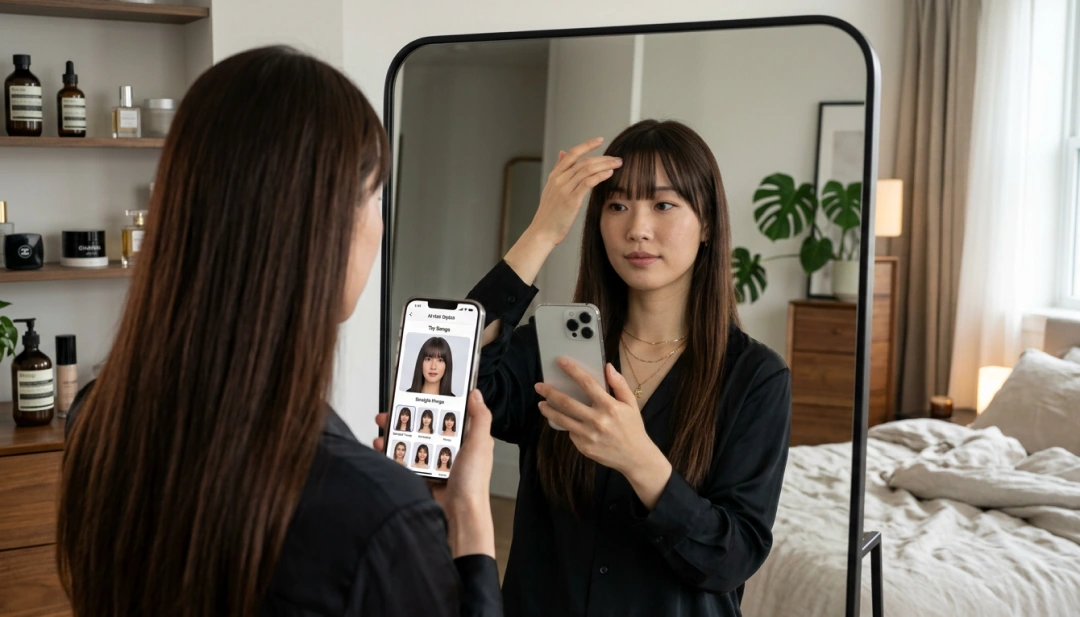
Apps developed by large salons or hairdressing networks tend to be more accurate, as they were created with input from real professionals. Generic tools can work well as joke or initial inspiration, but should not be your only reference. If you are considering a drastic change, it is worth looking for more respected and well-rated simulators in app stores.
Truth: They Democratize Access to Hair Simulation
A few years ago, only high-end salon customers had access to consulting with photography and digital simulation. Today, virtually anyone with a smartphone can access these tools for free or for a very low value. This has completely democratized the decision process on haircuts, allowing people from different socioeconomic backgrounds to make more informed choices.
This technology also helps shy or insecure people who want to explore new styles without pressure.You can test hundreds of options in the privacy of your home, without fear of judgment, until you find something that really likes and trust to lead to the professional.For teenagers, people in transition and anyone exploring their visual identity, these tools offer valuable creative freedom.
Myth: Social Media Filters Work Like Cutting Simulators
Many people confuse social media filters with dedicated haircut simulators. Although both use facial recognition and artificial intelligence, they are tools with very different purposes and levels of accuracy.Social filters are designed primarily to entertain, not to offer an accurate and realistic visualization of a specific cut.
Filters tend to be exaggerated, distort facial proportions or not faithfully respect the natural pattern of your hair. In addition, most are optimized for photos at specific angles and with particular lighting. If you are going to choose an important haircut based on a simulation, it is better to invest in a tool developed specifically for this purpose, and not in a casual fun filter.
Truth: Simulators Are Tools in Constant Improvement
Hair simulation technology continues to evolve rapidly. Developers invest in more accurate texture recognition, greater variety of cuts, ability to simulate different hair tones and even more faithful representation of hair with different ethnicities and natural characteristics. Some modern simulators can even adjust the size of the cut image according to the length of your current hair, offering a more realistic visualization.
More advanced systems now integrate augmented reality, allowing you to see cutting on the go, from different angles and in different illuminations.Some allow you to simulate not only cutting, but also color and texture together, offering a much more complete view of the final transformation. As artificial intelligence advances, these tools become increasingly useful and accurate.
Myth: A Simulation Is As Reliable As a Professional’s Opinion
As advanced as technology is, it will never completely replace the experience and knowledge of a professional hairdresser.A specialist can evaluate factors that machines cannot easily capture, such as facial symmetry, proportionality, natural hair movement and how a specific cut will be maintained over time. Professional opinion is indispensable for a well-founded decision.
A good hairdresser also knows your personal limitations, your specific hair challenges and can offer creative alternatives that you had not even considered. This personalized consulting is impossible to replicate completely with algorithms. The simulator works best when used as a starting point for this professional conversation, not as your substitute.
Truth: You Should Test in Different Conditions and Angles
To get the best results when using a hair cutting simulator, you should try the same image on several cuts, test it under different illuminations and from different angles. Take several photos of yourself in different conditions: natural light, artificial light, facing, sideways, three-quarters. The accuracy of the simulation improves significantly when you offer the algorithm different perspectives of the same person.
Also, test your favorite cuts on different clothes, environments and contexts. A cut that looks excellent in a studio photo may look different in your everyday life.Play the conditions that will be most common you be when using the cut hair. This practical approach of multiple testing offers a more realistic view and significantly increases the likelihood of you being satisfied with the final result.
Myth: Simulators Work Well for Drastic Changes in Length
If you are thinking of cutting a significant amount of hair, the simulation is less reliable.The algorithms work best with moderate changes, within the length and volume you already have. Radical changes, such as passing from long hair to shaved or from very short hair to very long, defy the limits of current technology.
For drastic transformations, the simulation offers only an approximation, not an accurate prediction. In these cases, the face-to-face consultation with the professional becomes even more important. You can request that the hairdresser show inspiring photos of other clients who have made similar transformations, or even make an intermediate cut as a test before going completely to the desired change.
Truth: Take Your Printed or Digital Simulations to the Hall
When you finally decide to make the cut, take your favorite simulated images to the salon. You can print them in color or simply show on your mobile. This gives the hairdresser a clear visual reference of your intentions and allows him to offer realistic feedback on feasibility and necessary adaptations. This visual communication dramatically reduces the risk of misunderstandings.
During the consultation in the salon, do not hesitate to ask questions: how the cut will behave as it grows, what is the necessary maintenance, how to comb daily, what products to use. The professional can also suggest variations of the image that would work best for you. This collaborative conversation, armed with visual simulation, results in much more satisfactory experiences for everyone involved.
Myth: Simulators Make Sure You Love the Result
No tool, no matter how advanced, can guarantee that you will love the final cut. There are variables that escape the control of the simulation, such as the specific skill of the professional who performs the cut, the quality of the material used, and even psychological factors such as your confidence and personal satisfaction with changes. The simulation reduces risks, but does not completely eliminate the possibility of dissatisfaction.
The important thing is to have realistic expectations.The simulation offers valuable guidance, increases your chances of success and improves communication with the professional. But the end result also depends on technical execution, proper maintenance and, ultimately, your personal acceptance of the change. Use the tool as a guide, not as a guarantee.
Truth: Simulators Deliver Real Value Even With Limitations
Despite all the limitations mentioned, haircut simulators offer genuine value to most people. They save time, facilitate communication, offer personalized inspiration and increase confidence before an important decision.For those who benefit most from this technology, it can be truly transformative in terms of shopping experience and satisfaction with the result.
The key point is to use the tool correctly: as a complement to the professional consultation, not as a substitute. Recognizing its limitations and taking advantage of its strengths, you get a balanced approach that offers the best of both worlds. The technology exists to serve you and facilitate your decisions, provided that you use it with realistic expectations and together with appropriate professional guidance.