Automotive Scanner: See Your Car Problems
Anúncios
Most drivers are suspicious when the dashboard light comes on, but don’t know exactly what it means. An automotive scanner can reveal your car’s hidden problems without spending a fortune on a workshop. Understanding how this tool works is essential to diagnose faults and keep your vehicle in perfect condition.
There are many myths about automotive scanners circulating among car owners. Some believe they only work on new vehicles, others think that any scanner solves everything, and many fear that the device will damage the electronics of the car. The truth is quite different: these tools are affordable, practical and completely safe when used correctly.
What Is an Automotive Scanner?
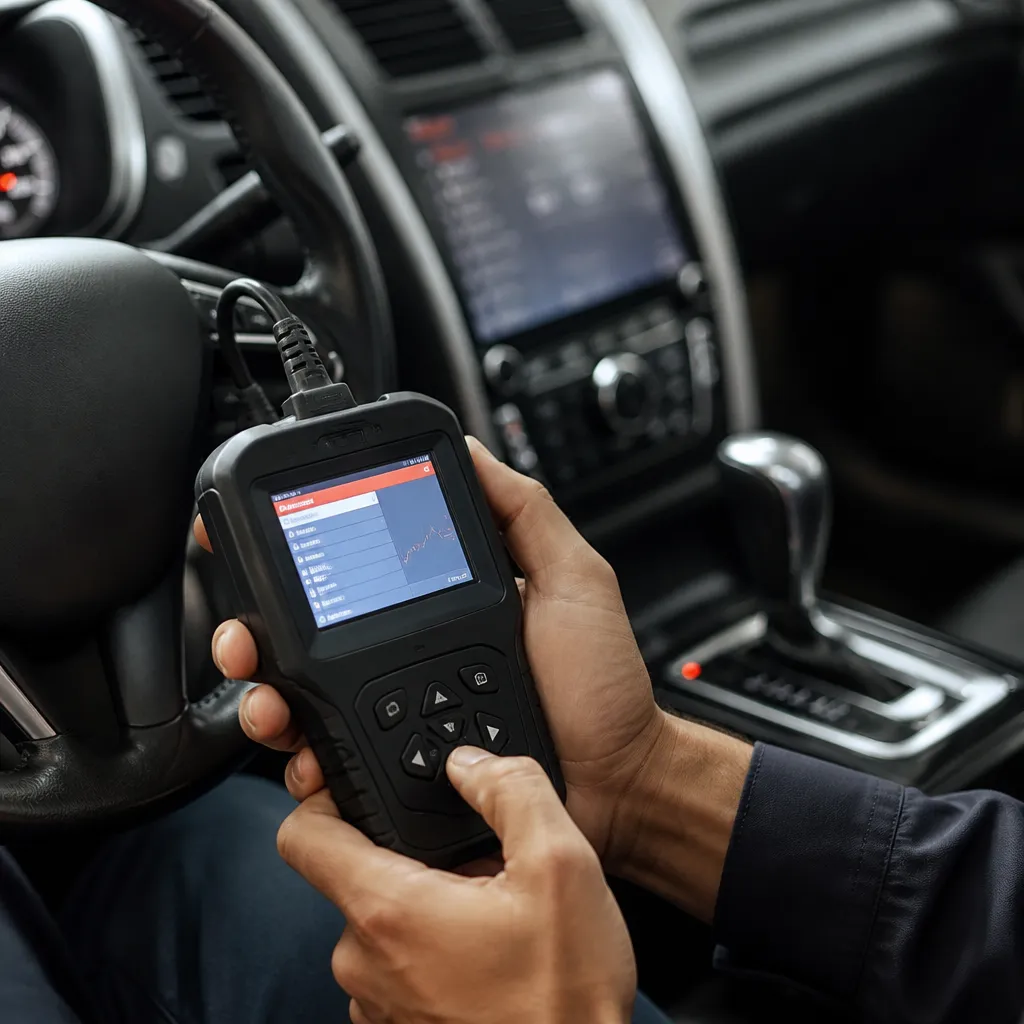
An automotive scanner is a device that connects to the diagnostic port of your car and reads the error codes generated by the vehicle’s electronic system.When something goes out of the ordinary, the embedded computer records this fault and turns on the engine check light on the dashboard. The scanner decodes these codes, allowing you to know exactly which part or system is in trouble before you even get off the car.
Nowadays, there are scanners of different types and prices. Basic models cost between R$ 100 and R$ 300 and read the most common error codes. Professionals, used by mechanics in workshops, can cost thousands of dollars and offer advanced diagnostics with detailed fault history. Regardless of the type, they all work by connecting to the OBD-II (On-Board Diagnostic 2) port, standardized on virtually all modern vehicles.
Myth: Scanners Only Work in New Cars
This is one of the biggest mistakes that circulates among vehicle owners. Many people believe that automotive scanners work only on cars manufactured from 2010 or 2015. In reality, any car produced after 1996 has the mandatory OBD-II port and can be diagnosed with a scanner. This means that you can use this tool in a significant majority of cars circulating on Brazilian streets.
OBD-II port became mandatory internationally for more than 25 years precisely to standardize the diagnosis. American cars have needed the door since 1996, european since 2001, and brazilians manufactured from 2008 already leave the factory with it. Even vehicles with 15 or 20 years can store information about faults that the scanner can read easily. The only real limitation is that very old cars, before 1996, do not have this advanced electronic system.
Myth: Every Scanner would Solve the Complete Problem
Many car owners imagine that buying a scanner will make them mechanics able to solve any defect in the vehicle. This mistaken expectation leads to disappointment when the device “does not work”. Actually, a scanner is a diagnostic tool, not a repair. It identifies the problem, but it is up to you to decide whether to go to the mechanic, whether to research the problem or whether to try any repair that is within your reach.
A scanner can say that there is failure in the oxygen sensor, but it will not change the sensor for you. It can indicate that the battery is low, but will not recharge it. It can point out that the catalyst is damaged, but this is an expensive part that requires technical knowledge to replace. The great value of the scanner is in saving a preliminary visit to the mechanic only to find out what is wrong. With the error code in hand, you arrive at the workshop already knowing what the fault is, which can even negotiate a better price for the service.
Truth: Scanners Are Completely Safe For Your Car
A legitimate concern that many owners have is whether a scanner can damage the electronics of the car. The direct answer is no, as long as you use it correctly. A scanner just reads the information stored in the electronic system of the vehicle, just as you read a book without damaging it. It does not change critical settings, does not change the fuel injection and does not interfere with any car safety system.
The OBD-II port is specifically designed to be safe and secure. Any device that connects to it goes through internal protections against power surges and malfunctions.Car manufacturers and regulatory bodies ensure that this port can support multiple repeated connections without any risk. Professionals around the world connect and disconnect scanners all the time in their business, and no reputable workshop would have an equipment that would pose a risk to their customers’ vehicles.
Truth: Different Scanners Have Different Levels of Functionality
Not all scanners are the same, and this is a truth that many consumers ignore when they make their purchase. A basic $ 150 scanner will read and delete error codes, displaying the meaning of each fault. An intermediate scanner can store fault history, show real-time data from sensors and even suggest solutions. A professional scanner can do all this and still offer specialized functions for specific brands, camera adjustments and advanced security systems.
Your choice should depend on how much knowledge you have about cars and how much you want to invest. If you are an ordinary driver who just wants to know why the light turned on, a basic scanner solves perfectly. If you already mess with cars, study mechanics or work in workshops, a more advanced model justifies the investment. There are also scanners via application that connect to the OBD-II port through Bluetooth, offering convenience but with generally more limited functionality compared to physical appliances.
Truth: Using a Scanner Saves Time and Money
This is perhaps the most valuable truth about automotive scanners and the real reason why homeowners should own one. Without knowing what the problem is, you enter the workshop in the dark, totally dependent on the mechanic to diagnose the fault. This can mean diagnostic service hours that cost money, regardless of whether you solve repair there or not. With a scanner in hand, you arrive already knowing the specific error code, saving diagnostic time and allowing a more accurate budget.
In addition, a scanner allows you to monitor small faults before they turn into major problems. If you notice a strange variation in the sensor data read by the device, you can take preventive measures. Many owners were able to avoid expensive repairs simply because they detected irregularities at an early stage through the scanner. The initial investment in a quality device is paid the first time you avoid being charged for hours of unjustified diagnosis in a workshop.
Understanding how a scanner works and recognizing the myths about it turns you into a more informed and secure car owner. You do not have to be a mechanic to use one of these tools, just knowing how to connect it, reading the error codes and researching their meaning.In the era when electronics completely dominates automobiles, having a scanner is not luxury, it is practical sense.