Learn Crochet by Mobile with App
Anúncios
Learning crochet by mobile is now an accessible and practical reality for those who want to master this art without leaving home. There are specialized applications that turn your smartphone into a personal classroom, offering video classes, interactive tutorials and tools that facilitate learning from the basics to advanced techniques.
The market for educational applications for crochet has grown significantly in recent years, bringing innovative solutions that adapt to your pace and availability. You can practice while getting around, enjoy free time and advance on your own schedule, without pressure from fixed schedules or face-to-face classes that do not always fit into the routine.
Why Learning Crochet by Cell Phone is Different
Unlike traditional methods, a mobile crochet learning app offers flexibility that face-to-face courses simply cannot provide. You will pause a video lesson at the exact moment you need to practice a stitch, come back as many times as you want and reapply the technique immediately, without waiting for the next class of the week.
Portability also changes the game: take your learning to the kitchen while drinking coffee, to the sofa while relaxing at night, or even to the square when you are waiting for someone. Crocheting is a manual activity, but the theoretical and visual knowledge that feeds your execution is always at hand, literally in your pocket.
In addition, many apps work offline or with previous download of content, this means that you do not depend on constant internet to learn and practice. This feature is especially valuable if your connection is not as fast or you prefer to save mobile data while learning.
 Learn knitting and crochet
Classification:
”’ think it’S.
4.62
Age Classification:
Free Classification
Author:
Rstream Labs
Platform:
Android
Price:
Free
▶Download on Google Play
Learn knitting and crochet
Classification:
”’ think it’S.
4.62
Age Classification:
Free Classification
Author:
Rstream Labs
Platform:
Android
Price:
Free
▶Download on Google Play
The Top Crochet Learning Apps Available
When you search for a mobile crochet learning application, you find several options on the market, each with different characteristics that meet different learning styles. Some focus on high quality video classes, while others bet on step-by-step tutorials with static images and varied project patterns.
Platforms like Skillshare and Udemy also offer crochet courses that can be accessed via mobile app, bringing renowned instructors and structured content at difficulty levels. These options usually work by subscription or single course purchase, with lifetime access to the material.
There are also applications that specialize exclusively in crochet, such as those that combine stitch patterns, row counters and interactive diagrams to help your learning visually and practically. These tend to be more direct and focused, dispensing with irrelevant content if you just want to learn crochet and nothing else.
Comparison of Key Features that Differentiate Apps
When choosing a mobile crochet learning app, you should consider which type of learning works best for you. If you are visual and learn by observing movements in real time, HD video lessons are essential; if you prefer quick references and pattern diagram, a minimalist app with many patterns will be your best ally.
Some apps offer communities within the platform where you can share your projects, ask questions with other creators and receive feedback. This social interaction can be motivating if you like community stimulation, but some users prefer to learn quietly and independently, without pressure to show their work.
Cost is another important factor: while some apps are completely free with ads or limited version, others charge a monthly or annual subscription to unlock all content.
The availability of patterns and designs also varies greatly: more robust applications bring hundreds of models of crochet pieces, from simple cushions to complex clothes and accessories. If you want variety and progressive challenge, this is crucial; if you just want to learn the basics, a simpler app may be enough.
How to Choose the Best App for Your Needs
To choose the best app to learn crochet on your phone, start by reflecting on your goal: do you just want to know the basics or do you want to become a creator of complex pieces? This answer will tell you a lot about which type of app will make the most sense for your learning path.
Try free versions or demos before paying by subscription, as each app has different interface and teaching style.What works beautifully for one person can be confusing or boring for another, so personal experience is irreplaceable in this decision.
Also check the reviews and comments of real users, paying attention specifically to reviews about teaching clarity, loading speed and user support. Someone who says “it takes a long time to load the video lessons” or “the service never answered my questions” is offering valuable information that can spare your frustration in the future.
Consider compatibility with your operating system (iOS or Android) and the amount of space the app consumes on your phone. If your smartphone is already full, a lightweight app that does not require heavy installation may be a better solution than a platform with many features you may never use.
Learning Structure: From Beginner to Advanced
Most apps work at progressive levels, starting with teaching fundamental points like current, low, and high. This progression is important because each new technique builds on the previous ones, and learning out of order can generate frustration and misunderstanding.
In the initial levels, you will learn how to hold the needle and wire, how to maintain proper tension and how to perform the basic points accurately. Many apps dedicate several classes only to the basics, as understanding these building blocks correctly saves time and reduces the need to relearn later.
As you go, the apps introduce more sophisticated techniques like decreases, raises, circle work, color changes, and more elaborate patterns. At this point, you will start working on real projects like hats, small blankets, dolls, and garments, applying everything you have learned in an integrated way.
Advanced levels often cover specialized techniques such as amigurumi (crochet-filled creatures), Irish crochet, and three-dimensional work.If you get to that point, you are ready to take on creative challenges and even start drawing your own patterns using the principles you have internalized.
Practical Resources that Power Your Learning
In addition to video lessons, the best apps to learn crochet on your phone include tools that turn your phone into a practical companion while you work.Road counters, for example, prevent you from losing count when you are doing a piece with many repetitions, a common problem that discourages beginners.
Interactive diagrams and international crochet symbols are also essential: instead of trying to decipher a pattern written in words, you visually see which point to perform in each position. This significantly speeds up learning and reduces the margin of error, especially when you are working on more complex patterns or with instructions in different languages.
Some apps include inspiration gallery with photos of finished parts created by real users, which motivates and shows creative possibilities that you might not have considered. Seeing a beautiful cushion made by someone who started from scratch in the app is inspiring and reinforces that learning leads to concrete and tangible results.
Wire calculators and quantity estimates also appear in more complete apps, helping you know how much material you need to buy for a specific project before investing money.This kind of practical feature shows that the app is designed to solve real problems that creators face.
Teaching Methodology: Different Approaches to Different Learners
Not all people learn the same way, and mobile crochet learning apps recognize this reality by offering different methodologies within the same platform. Some allow you to choose between following a structured sequence of classes or freely exploring content according to your interests.
Socratic apps use questions and challenges to guide your learning, letting you discover answers with gradual support. This style works great for people who like to investigate and understand why things are going, rather than just following instructions mechanically.
Others opt for the “project learning” approach, where you start a real project from the first lesson and learn techniques as needed to complete it. This method keeps you motivated because you produce something tangible quickly, rather than practicing abstract points for weeks before you do your first piece.
Gamified apps add game elements like scores, badges, and weekly challenges to make learning more fun and competitive. If you respond well to this kind of incentive, a gamified app can keep you engaged and consistent in your learning in ways a traditional method would never.
Integrating Digital Learning with Real Physical Practice
An important aspect that differentiates a really effective application from others is how it helps you integrate learning on mobile with physical practice with real needle and thread. Many apps offer checklist projects or journals where you record what you practiced, creating accountability and keeping track of your progress.
You can photograph your work within some applications, creating a personal portfolio that documents its evolution from the simplest to the most sophisticated pieces. This visual record is motivating and also works as a reference when you want to go back and remember how you performed a technique months ago.
Some apps allow you to share your work with the community of creators within the platform, receiving feedback and suggestions for improvements. This interaction, when very moderate, creates a supportive environment where beginners feel encouraged to continue even when they face difficulties.
The most effective approach is to use the app as a constant guide and reference while you physically work with wire and needle on the side. Leave your phone at an angle where you can quickly consult when in doubt, pause when you need to practice a movement, and come back whenever necessary.
Comparative Analysis: Which App Fits Each Apprentice Profile
If you are someone who loves structure and clear step-by-step instructions, apps focused on structured courses like those provided by larger platforms will work better than minimalist, experimental apps.
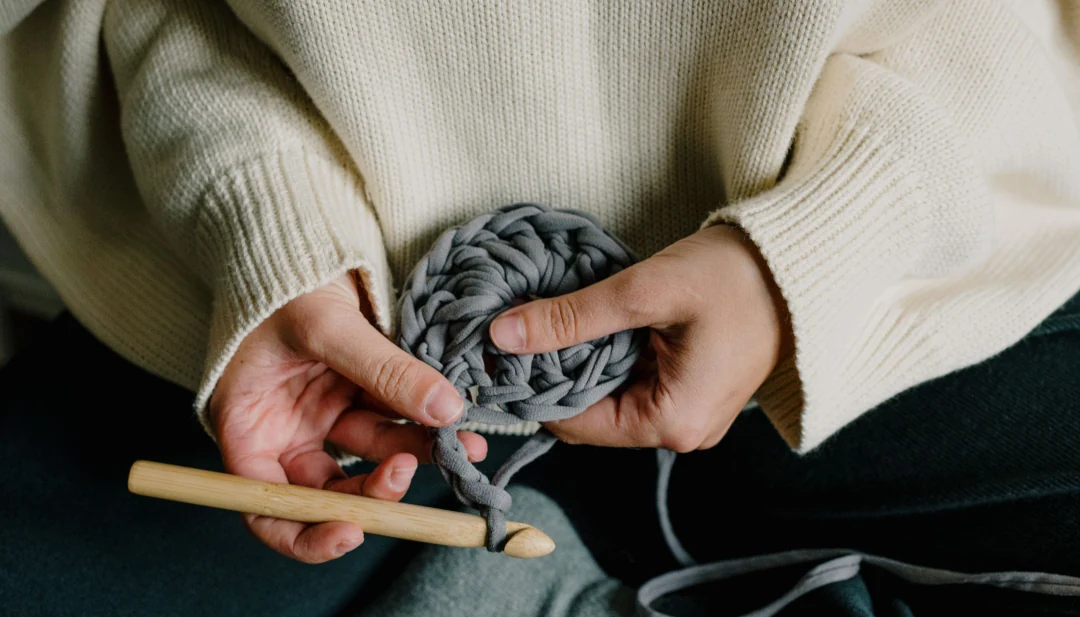
For those who are visual and learn by observing real movement, applications with many video classes in high quality and in clear language are non-negotiable. Reading text descriptions or looking at static diagrams will never be enough for you; you need to see a real person running the point from various angles to finally understand.
If you are creative and want the flexibility to experiment and create your own patterns quickly, an app with many examples of patterns, large library of international symbols and design tools will be more aligned with your style.
Social learners who love community and peer feedback need to look for apps with robust community functionality, active forums, and space to share work.A standalone, solitary app, even if it has great lessons, will not satisfy their need for social connection and recognition.
For those who have limited time and want to learn in small blocks, applications with short classes (5 to 10 minutes) are more realistic than courses that require commitment of 1 hour per week. You know your own standard of living, so choose an app that suits it, not one that requires you to change your life to the application.
Cost-Benefit and Available Price Models
The market offers several pricing options when it comes to mobile crochet learning apps, from completely free to monthly premium subscription.Understanding each model helps you make the best financial choice for your situation.
Fully free apps usually monetize through ads or offer limited version with reduced content, as long as you eventually pay for the full version.If you tolerate ads and are happy with basic content, this can be a cost-effective option to start with no financial risk.
Monthly subscription models typically range from 5 to 20 reais, giving unlimited access to all platform content during that month. You cancel whenever you want, which is flexible, but over the course of a year this amount can be significant if you add several different apps.
Annual subscriptions often offer a discount on the monthly amount, usually saving 30 to 40% if you pay all year at once. This option works best if you are confident that you will use the app consistently over the next 12 months and want to save money.
Some apps use a one-time payment model, charging a one-time fee of 50 to 150 reais for permanent, unlimited access. This model is ideal if you want ownership of the content and don’t like to pay a continuous subscription, and often includes future free updates.
Quality Assessment: How to Identify a Really Good App
A good application to learn crochet by mobile phone presents clear production quality in the videos, with high resolution, crystal clear audio and lighting suitable for you to see every detail of the techniques. If you can not see clearly how a point is executed because the video is poor quality, the app failed in its fundamental purpose.
The instructor or instructor should communicate clearly, explaining not only what to do but also why each step, and offering tips to avoid common mistakes. Mumbled, very fast or confusing instructions indicate that the app was developed by someone focused more on quantity of content than quality of teaching.
Look for apps that have been updated regularly, indicating that developers are committed to keeping the platform functional and relevant. An app that has not been updated for six months or more may have unpatched bugs, features that do not work properly on new versions of operating systems, or outdated content.
High ratings on app stores are a positive sign, but read individual reviews carefully to understand why people like it or dislike it. An app with a 4.8 rating but comments complaining that “constantly breaks” or “support never responds” may not be as good as the note suggests.
Test user support before you pay: send a simple question or feedback and see how long it takes to respond and if the answer is really useful. Quality apps have a team dedicated to answering user questions quickly because they understand that support is an important part of the educational experience.
Common Challenges and How to Overcome them with the Right App
One challenge many beginners face is losing count during a project, especially on parts that require many rows or a repeating pattern.You find apps that solve this with built-in digital counters that you tap into every completed row, freeing you from the need to remember numbers in your head while working.
Another common problem is difficulty reading and interpreting traditional patterns written in words or diagrams with international symbols that you do not master. Applications with interactive diagrams and step-by-step explanations of this same pattern dramatically reduce this confusion and allow you to execute more complex projects with confidence.
Lack of motivation is an emotional challenge that many face when learning alone at home, especially after the initial novelty passes. Apps with active communities, weekly challenges, or gamification systems offer external structure that keeps you engaged when your internal motivation fluctuates.
Specific technical questions that arise during practice are difficult to resolve on your own when you do not have an instructor on the side. Some apps offer forums where you can post photos of your work and receive feedback from instructors or other more experienced creators who help identify where you are going wrong.
Combining Multiple Apps for Maximum Learning
You don’t have to limit yourself to a single app for learning crochet on your phone if different apps bring features that complement each other.Some experienced creators use one app for video lessons, another for patterns and references, and a third to manage their projects in progress.
This multi-app approach works well if you have time to explore and enjoy having specialized tools for each role, but it can be confusing or overwhelming if you are starting out. A beginner often benefits more from a single well-integrated app than from fragmenting learning by several different apps.
If you decide to use multiple apps, choose those that complement each other rather than repeat themselves. For example, an app structured to learn fundamentals + an app with a huge library of patterns makes more sense than two apps that cover the same content in slightly different ways.
Keep in mind that more apps don’t mean better learning if you can’t focus and complete content.It’s better to master an app and its contents completely than to jump between five different apps without ever developing real depth in your skills.
Practical Tips to Maximize Your Learning With Apps
Dedicate consistent time to learning, even if small: 15 minutes of daily practice is more effective than a 2-hour session once a week, because your muscle memory develops better with frequent repetition. Use the app as your ally in this consistency, consulting it regularly while practicing with needle and thread.
Don’t jump to advanced projects before you’ve really mastered the fundamentals, even if you feel anxious about creating something “real”. The frustration of trying to make a part that you’re not technically ready for can discourage you so that no app can recover.
Manual notes on paper while attending classes also help a lot, as the act of writing reinforces the memory so that just watching never can. Create your own glossary of crochet terms, your own notes on how you perform a point, your personal modifications of techniques.
Practice each new technique on disposable or cheap yarns before investing in expensive and beautiful materials for a real project. Learn from “testing” practice, complete small projects, gain confidence, and only then use premium yarns on pieces that you really want to look perfect and last.
Record your progress by photographing your work regularly, not only to share with app communities but for your own sense of accomplishment. Physically seeing how much you have evolved in three months or a year is extremely motivating and reinforces that the time you invested in the app had real value.
Future Perspective: Trends in Crochet Apps
Augmented reality technology is starting to show up in some experimental apps, allowing you to see how a finished piece will look in your space or your body before spending hours crocheting it. This innovation promises to transform how you choose designs and visualize end results.
Artificial intelligence is also being integrated into some apps, offering visual recognition of points where you point the camera at your creation and the app identifies whether you are running correctly or offers suggestions for improvement. This technology is still in its early stages but has immense potential to personalize feedback in real time.
Global communities are becoming more robust, with machine translation capabilities allowing creators from different countries to interact, share patterns and learn from each other at scale never seen before. A pattern created by someone in Tokyo can inspire and educate someone in Rio de Janeiro instantly.
More niche-specific apps (like just amigurumi, or just wearable crochet) are emerging, offering ultra-focused experience for people who already know what direction their interest in crochet will take.
Integration with e-commerce platforms is also growing, allowing you to buy materials recommended by the app or patterns created by professional designers, all without leaving the application. This creates a complete ecosystem where learning and consumption are integrated, facilitating the journey of the creator.